Textile Heritage · Bedding Guide
Coyuchi and Libeco Sheets: How to Compare Fiber Origins and Craftsmanship
When choosing linen sheets, a label can tell a compelling story—but the most useful details are often the quiet ones: what the fiber is, where it was grown, where it was woven, how the fabric was finished, and what care it asks of you. Coyuchi and Libeco offer distinct points of reference for shoppers weighing natural-fiber bedding. A thoughtful comparison looks past brand reputation to the evidence in each product description.
Published November 23, 2026
Begin with the textile, not the name
Brand identity can set a mood: one may suggest a contemporary approach to organic home textiles, another a connection to European linen-making traditions. But a name alone does not explain how a particular sheet is made. Collections can differ in fiber, weave, weight, finish, and origin, even within a single brand. Compare the exact product specifications rather than assuming that every item under a label shares the same material story.
This distinction matters especially when comparing Coyuchi sheets with Libeco sheets. The two names may bring different associations for shoppers, but the practical comparison begins with the product page. Is the sheet 100% linen, or a blend? Does the description identify flax-growing regions, weaving locations, or only the country where the item was finished? Is a certification named and clearly attached to the product? Those specifics provide a more dependable basis for judgment than broad language about naturalness, luxury, or heritage.
Think of the product description as a small provenance record. The more clearly it separates fiber origin from textile production, the better equipped you are to understand what you are buying. “European flax,” “woven in Belgium,” and “finished in Portugal,” for example, refer to different stages of a textile’s journey. One does not automatically prove the others.
Fiber origins: what the label can—and cannot—tell you
Linen begins with flax. The plant is harvested for its stem fibers, which are processed and spun into yarn before being woven into fabric. Yet a linen product’s story may involve several locations: the region where flax was cultivated, the place where yarn was spun, the mill where cloth was woven, and the facility where it was dyed or finished. These steps may occur in one country or across several.
For a meaningful comparison, look for those stages to be described separately. A statement that linen is “European” is informative at a broad level, but less precise than a product detail identifying the flax’s country or region of cultivation. Likewise, a Belgian linen designation can speak to weaving and yarn provenance according to the wording provided by the maker; it should not be treated as automatic proof that the flax itself was grown in Belgium. Product descriptions sometimes clarify this distinction, and sometimes leave it open.
When assessing Coyuchi, note the exact fiber and origin claims attached to the individual sheet set. If a listing identifies organic flax or a certification, check that the information applies to that specific product and not merely to the brand’s wider assortment. For Libeco, apply the same discipline: record what the particular sheet’s description says about the linen, yarn, weaving, and finishing, without extending a detail from one collection to every item.
Organic is a useful term when it is supported by a stated standard or certification, but it answers a different question from geographic provenance. A fiber can be described as organic without revealing the precise farm or country of origin. Conversely, a product may identify its region of cultivation without claiming organic certification. Keep these questions distinct: What is the fiber? Where did it come from? What standard or certification is named? Where did the textile work take place?
Responsible comparison also means noticing what is not stated. If a product page names only the country of manufacture, that does not necessarily tell you where the flax grew. If it gives a fiber composition but no weaving location, do not fill in the blank from a brand’s general reputation. A clear account of known details—and a sensible pause around unknown ones—is more useful than an embellished supply-chain story.
Craftsmanship lives in construction and finish
Once fiber and origin are clear, turn to construction. The weave shapes the hand, drape, and surface character of a sheet. Linen may be presented in a crisp, relatively open weave or treated for a softer, more relaxed feel. A garment-dyed, stone-washed, or softened finish can change the fabric’s first impression, although the terms describe different processes and should not be treated as interchangeable. If a listing uses a finishing term, consider what it explicitly says rather than assuming a particular technique or result.
Fabric weight offers another point of comparison. It is commonly expressed in grams per square metre or ounces per square yard. A higher number generally indicates more material per area, but weight by itself does not determine softness, durability, or quality. Yarn characteristics, weave density, finishing, and how the fabric is handled all contribute to the experience. Compare weight only when the measurement and units are stated consistently, and treat it as one clue—not a verdict.
Details at the edges can also reveal the maker’s priorities. Look for hem dimensions, stitching, corner construction, fitted-sheet pocket depth, elastic placement, and any ties or closures. These are not ornamental footnotes. A fitted sheet must suit the mattress depth; a well-considered hem can affect how the finished bed looks; and strong, even stitching can help a frequently laundered piece retain its shape. When product descriptions are silent about these details, consult the care and sizing information before making assumptions.
Craftsmanship is not synonymous with hand production. A well-made textile may involve skilled industrial weaving, careful finishing, or a combination of processes. The useful question is whether a brand describes the construction with enough precision to make the product legible: material, weight, weave or finish, manufacturing location, and practical details. Specific information allows the shopper to distinguish an actual construction attribute from atmospheric brand language.
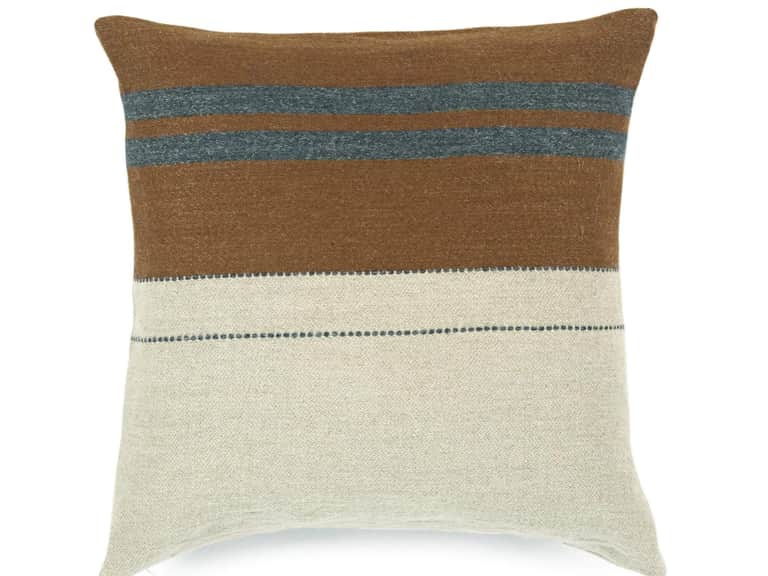
Libeco’s The Tack Stripe Pillow (sham) is an example of a product description that names several concrete textile details: 100% linen, a washed finish, a medium-weight tightly woven twill, and a 9-centimetre black-and-white sand stripe. The listed weight is 200 g/m², and the care guidance specifies mild soap, a maximum wash temperature of 40°C, and line drying where possible. It is a pillow sham, not a sheet, so it cannot stand in for a sheet specification. It can, however, illustrate how composition, weave, finish, weight, and care can be reported as separate facts.
How linen feels in daily life
Linen’s appeal is partly visual: the surface has a natural irregularity that can lend a bed an unstudied, tactile quality. It is also valued for breathability and its ability to manage moisture, though the sensation varies by weave, weight, finish, room conditions, and personal preference. One shopper may love a dry, textured hand; another may prefer cotton sateen’s smoother, more closely familiar surface. Neither preference is more correct.
Consider how the sheets will be used. A warm sleeper may prioritize airflow and a lighter construction. Someone who prefers a substantial drape may gravitate toward a heavier fabric, provided it still feels comfortable in their climate. If you are sensitive to texture, a softened or washed finish may be worth investigating, but read the description carefully: “softened” does not provide a standardized measure of softness, and the fabric may change after laundering.
New linen can feel more structured than linen that has been washed repeatedly. Many linen textiles soften with use, but the pace and degree depend on the fiber, construction, finishing, and care routine. A shopper comparing two products should therefore distinguish between the out-of-package feel and the material’s likely evolution. Reviews can offer personal impressions, but they are subjective; prioritize the product’s stated specifications for objective comparison.
Do not rely on thread count as the central measure when comparing linen. Thread-count figures are commonly emphasized in cotton bedding and do not provide a straightforward ranking of linen quality. Fiber composition, yarn, weight, weave, finish, and construction are more useful information to seek. If a product page foregrounds a single number, look for the rest of the textile story before drawing a conclusion.
Care instructions are part of craftsmanship
A sheet’s care requirements affect how it fits into everyday life. Read the instructions before purchase, not after the first wash. Check the maximum water temperature, whether a gentle cycle is recommended, the suggested detergent, drying method, and guidance on ironing or bleaching. Two products that look similar online may ask for quite different routines.
Linen care often favors a mild detergent and avoiding chlorine bleach, with line drying recommended where practical. Some products allow low or medium tumble drying; others specify a gentler setting or advise against over-drying. Follow the maker’s directions for the item in hand. A general linen-care rule cannot override product-specific instructions, especially when the textile includes a blend, a special finish, embroidery, or a dyed pattern.
Washing practices influence the fabric over time. Overloading a machine can restrict movement and place unnecessary strain on seams; harsh detergents and high heat may be inappropriate for some finishes. For a first wash, separate colors as instructed and avoid combining delicate pieces with rougher items such as garments with zippers. If the product recommends ironing while slightly damp, that instruction may help smooth the fabric while limiting the need for excessive heat. If a relaxed, naturally creased look is part of the appeal, ironing may be unnecessary—unless the label says otherwise.
Care also offers a practical way to compare value. A sheet that suits your preferred washing routine may be a better fit than one with a more elaborate origin story but inconvenient maintenance requirements. Consider whether you have space to line dry, whether you prefer a crisp pressed bed or an easygoing rumple, and how often you expect to launder the set. The best choice is not simply the most impressive specification; it is the one you can care for consistently.
A measured comparison of Coyuchi and Libeco
When comparing Coyuchi sheets and Libeco sheets, resist turning brand identities into fixed rules. A company’s reputation may guide your shortlist, but each collection needs to be evaluated on its own terms. One sheet may offer stronger documentation of organic sourcing; another may describe weaving location or construction in greater detail. Those are different strengths. The product page, not the label’s overall image, should decide which claims can be attributed to the item.
Set the listings side by side and compare equivalent products: a flat sheet with a flat sheet, or a complete sheet set with another complete set. Check whether each set includes a fitted sheet, a flat sheet, and pillowcases; whether sizes align with your mattress and pillows; and whether the fitted sheet’s pocket depth is suitable. A seemingly favourable price comparison can be misleading if the contents differ.
Then separate factual fields from impressions. “100% linen,” a stated weight, a named origin, or a care temperature are checkable details. Words such as “luxurious,” “pure,” or “exceptionally soft” communicate positioning or expected feel but are not measurements. They may still matter—bedding is experienced, not merely inventoried—but they should not substitute for construction and provenance information.
For an orderly comparison, create a short table or note with these headings:
- Composition: linen, cotton, silk, or a clearly identified blend.
- Fiber origin: stated country or region, if supplied.
- Certification: exact standard or certification named for the product.
- Manufacturing stages: spinning, weaving, dyeing, or finishing locations, where disclosed.
- Construction: weave, weight, finish, seams, hems, and fitted-sheet dimensions.
- Care: wash temperature, detergent, drying method, and ironing guidance.
- Set contents: the pieces included, sizes, and any exclusions.
This method keeps the comparison grounded. It also makes gaps visible. If one product page is more detailed, that does not automatically prove the textile is superior; it does mean the shopper has more information with which to assess it. Where a detail is important—such as mattress depth or a certification—seek clarification from the retailer or manufacturer instead of inferring it.
Sourcing language and the question of sustainability
Natural fiber and sustainability are related conversations, but they are not interchangeable claims. Linen’s plant origin does not by itself establish the environmental impact of a particular product. Farming practices, processing, dyeing, transport, durability, and laundering all contribute to a broader picture. Likewise, a statement about local production may describe one stage of manufacture rather than the entire supply chain.
Look for specific, verifiable language. A named certification can help define what a claim covers, but it is worth checking which product and production stages are included. “Responsibly made” is broad; information about certified fiber, processing standards, or traceable origins is more actionable. Avoid assuming that “European,” “organic,” or “traditional” alone answers every environmental question.
Durability matters too. A well-used sheet that remains in rotation for years may serve a different purpose than a textile replaced frequently, but longevity depends on construction and care, not on a label alone. Before choosing, consider whether the material suits your household and whether its maintenance instructions are realistic for your routine. The most responsible purchase is often the one you understand, use regularly, and maintain appropriately.
Which sheets are right for you?
If traceable material information is your priority, choose the product whose listing clearly describes fiber composition and origin. If you value a particular European textile tradition, look for explicit details about where yarn or cloth was produced, and make sure the claim refers to the sheet you are considering. If ease of care is paramount, compare wash and drying instructions before weighing decorative details. And if tactile preference leads the decision, seek swatches or a retailer’s return policy where available; online adjectives cannot fully reproduce the feel of cloth.
Coyuchi and Libeco may appeal to shoppers for different reasons, but the decision need not be framed as a contest between reputations. It is more useful to ask which product offers the clearest, most relevant combination of provenance, construction, comfort, and care. A well-documented sheet that matches your sleep preferences is a stronger choice than a product selected solely for its name.
In the end, linen bedding rewards attention to detail. The most telling story is not necessarily the grandest one. It may be a precise fiber composition, an honest account of where weaving occurred, a weight that suits your climate, or care guidance you can follow without complication. Read the label closely, compare like with like, and let the fabric’s documented qualities—not assumption—guide the final choice.