Bath · Materials & Care
Linen-Cotton Bath Towels: A Guide to Absorbency, Texture, and Care
A well-chosen towel is a small daily luxury: ready at the end of a bath, easy to live with, and pleasing in the hand. Linen-cotton bath towels bring together the crisp character of linen and cotton’s familiar softness. Here’s how fiber blend, terry construction, size, and laundering shape the experience.
Linen-cotton bath towels occupy a thoughtful middle ground. They are not simply linen towels softened by cotton, nor cotton towels given a more textured finish. The two fibers contribute distinct qualities, and the way they are woven determines how those qualities perform at the sink, after a shower, or beside a bath. For everyday use, that balance can mean a towel that feels substantial without seeming ponderous and dries with a practical rhythm between washes.
The phrase “linen-cotton blend” tells only part of the story. Fiber percentages, yarn, weave, finishing, and dimensions all matter. Terry loops create a different surface and absorbent structure from a flat, waffle, or plain weave. Meanwhile, a bath towel and a bath sheet may use similar materials yet suit different routines simply because one offers more coverage and takes up more room on a rail.
Understanding those details makes it easier to choose a towel for how you actually live. A compact bathroom, frequent laundering, a preference for generous wrapping, or a desire for a lighter-feeling textile may each point toward a different format. The best choice is not the one with the most elaborate description; it is the one whose construction and care requirements make sense for your routine.
What the linen-cotton blend brings to a towel
Linen is made from flax fibers and is known for a distinctive, slightly dry hand and an irregular surface that gives the cloth visual and tactile character. Cotton, by contrast, is familiar for its soft feel and versatility. In a blended towel, these fibers can complement one another, but the precise result depends on their proportion and how the fabric is constructed. A label alone cannot promise a particular softness or drying speed.
The Simi bath towel, for example, is described as a terry towel made with 60% linen and 40% cotton. Its composition and looped construction are intended to provide an absorbent, quick-drying surface for regular use. The related Simi Bath Sheet uses the same 60/40 linen-cotton blend in a larger format. These are useful illustrations of how a shared fiber blend can be offered in two dimensions for different needs.
It is best to think of each fiber as part of a system, rather than expecting one material to deliver every desirable quality on its own. Softness is influenced by yarn and finishing; absorbency is influenced by both fiber and structure; drying time depends on fabric thickness, air circulation, humidity, and how the towel is hung. A linen-cotton towel may therefore feel different from another blend even when both use the same two fibers.
Natural fibers also have individual variation. A new towel can feel firmer than one that has been washed repeatedly, and a textured hand is not necessarily a sign of poor quality. Read the product details for the exact composition and care instructions, then allow for the fact that a textile’s feel may evolve with use.
Absorbency: fiber content is only one part of the picture
Absorbency describes a towel’s capacity to take up water, but the way it does so in everyday use is affected by more than the fiber name on a tag. The yarn, density, surface area, and construction all play a role. A towel with a generous looped surface presents more contact points than a smooth, flat cloth. The size and spacing of those loops, as well as the amount of fabric in the towel, influence its hand and performance.
In terry construction, loops rise above the base fabric and create a textured surface. Those loops provide space and surface area for water to meet the fibers. Terry is familiar in bath towels for this reason: it offers a plush, tactile structure suited to drying after bathing. Linen-cotton terry combines that looped surface with the character of both fibers. It should not be assumed, however, that every terry towel has the same thickness or absorbs in exactly the same way.
Absorbency and drying speed are related, but they are not identical qualities. A towel that holds more water may take longer to dry, while a lighter construction may be easier to air out between uses. The room’s ventilation, the spacing of towels on a rail, and whether the towel is spread open or left folded all affect drying. For a household that uses towels often, the practical question is not only “How absorbent is it?” but also “Can it dry comfortably before its next use?”
Product descriptions may use terms such as “highly absorbent” or “quick-drying,” but these are best considered alongside the construction and the maker’s care guidance. Look for clear material percentages, whether the towel is terry or another weave, and its dimensions. Together, those details provide a more useful picture than a broad claim about the fiber alone.
For best everyday performance, hang a towel so air can circulate around as much of the fabric as possible. A thick towel tightly folded over a crowded rail may remain damp longer than the same towel fully opened in a well-ventilated space. Regular washing also helps remove residues that can affect how fabric feels and handles moisture over time.
Texture and the character of terry
Texture is immediate: it is what you notice when you pick up a towel or draw it across the skin. Terry loops create a softly dimensional surface, while linen fibers contribute a more tactile, naturally irregular quality. Cotton can bring a familiar softness to the blend. The result is not necessarily as smooth as a fine flat-woven cloth, nor is it identical to a dense, all-cotton plush towel. Its appeal lies in the meeting of a textured surface and a balanced, practical feel.
Some people prefer a lofty towel that feels enveloping; others like fabric that feels lighter and easier to handle. Neither preference is inherently better. A towel’s weight and density can influence how substantial it feels, but heavier does not automatically mean more absorbent or more comfortable. Consider what feels pleasant against your skin, how much storage space you have, and how quickly you would like your towels to dry.
New textiles can change subtly as they are laundered and used. A towel may relax in the hand, and its surface may become more familiar. Follow the care label rather than trying to accelerate this process with high heat or aggressive washing. Fabric softeners can leave a coating on fibers, which may affect absorbency, so use them sparingly or avoid them if the manufacturer advises against them.
Color and finish are part of the experience, too. A natural, quietly textured towel can sit comfortably in a pared-back bathroom, while a carefully chosen color can make a practical object feel considered. For a restrained scheme, let the texture do the work: a tonal palette, neatly hung towels, and a simple arrangement can make everyday linens feel intentional without turning the room into a display.
Choosing between a bath towel and a bath sheet
The difference between a standard bath towel and a bath sheet is primarily one of coverage and scale. A bath sheet is larger, making it appealing to anyone who likes more fabric for wrapping after a shower or bath. A standard bath towel is generally easier to hang, fold, and store, particularly in a compact bathroom or shared household linen cupboard.
The Simi Bath Towel measures 55 inches long by 27.5 inches wide. The Simi Bath Sheet measures 59 inches by 39 inches. Those dimensions illustrate the practical distinction: the bath sheet is substantially wider, while the towel’s more compact proportions can be easier to manage for routine drying and storage. When comparing products, check the stated measurements rather than relying on “standard” or “oversized,” since naming conventions can vary.
- Choose a bath towel if easy hanging, compact storage, or a straightforward everyday size is a priority.
- Choose a bath sheet if broader coverage and a more enveloping wrap are central to your routine.
- Check your towel rail and storage space before selecting a larger format; generous dimensions need room to hang and dry.
- Consider household use as well as personal preference. Smaller towels can be simpler to rotate and store when several people share a bathroom.
Size does not change the care label, but it can change the convenience of care. A large towel may take up more space in the washing machine and on the drying line. Avoid overcrowding the washer: adequate movement helps garments and linens rinse properly. When a bath sheet is not fully dry between uses, spread it out or move it to a better-ventilated position.
A considered care routine
Good towel care begins with the instructions supplied for the particular product. Linen-cotton blends vary, so a general guide should never override the manufacturer’s label. For the Simi linen-cotton towels, the listed guidance allows machine washing at a maximum of 40°C, recommends line drying where possible, and advises medium heat if using a tumble dryer. These details offer a useful starting point, but always check the current instructions for the towel you own.
- Separate by color and fabric. Wash light and dark towels separately where appropriate, and avoid mixing them with items that have zippers, hooks, or rough surfaces that could snag the loops.
- Leave room in the machine. An overloaded drum can prevent water and detergent from circulating freely. Washing a manageable load supports a more thorough rinse and helps preserve the towel’s surface.
- Choose a mild detergent. Use an appropriate amount for the load and the machine. Excess detergent may leave residue, while chlorine bleach can be harsh on fibers and color unless the care label specifically permits it.
- Dry with airflow in mind. Line drying is a practical option when conditions allow. If using a dryer, follow the recommended temperature and avoid leaving the towel exposed to unnecessary high heat.
- Store only when fully dry. Let towels dry thoroughly before folding them into a cupboard. Good airflow between uses and before storage helps maintain a fresh, comfortable linen routine.
There is no need to iron a bath towel unless its care instructions recommend or permit it and you have a particular reason to do so. In most bathrooms, a natural, relaxed surface suits the function of the textile. Avoid overdrying: extended heat can be harder on fibers and may leave the fabric feeling less supple. If line drying leaves a towel a little firm, gentle handling after it has dried can help loosen the surface without resorting to aggressive laundering.
Washing frequency is a household matter shaped by use, ventilation, and personal preference. Allow towels to dry between uses, and change them regularly as part of a consistent bath-linen routine. A towel that remains damp for long periods may benefit from being hung more openly or moved to a better-aired spot.
How to compare linen-cotton bath towels
When shopping, begin with what can be verified. Fiber percentages show how much linen and cotton are present. Construction tells you whether the fabric is terry, waffle, or another type of weave. Dimensions clarify coverage, and care instructions indicate whether the towel suits the way you prefer to wash and dry household linens.
- Composition: Confirm the exact blend instead of assuming all linen-cotton towels use the same proportions.
- Construction: Look for a clear description of terry loops or another weave, since structure affects touch and handling.
- Dimensions: Compare measurements with your preferred coverage, towel rail, washing machine, and storage.
- Care requirements: Check the maximum wash temperature, drying advice, and any restrictions on bleach or other treatments.
- Use case: Decide whether the towel is intended for daily bathroom use, a guest setting, travel, or another purpose.
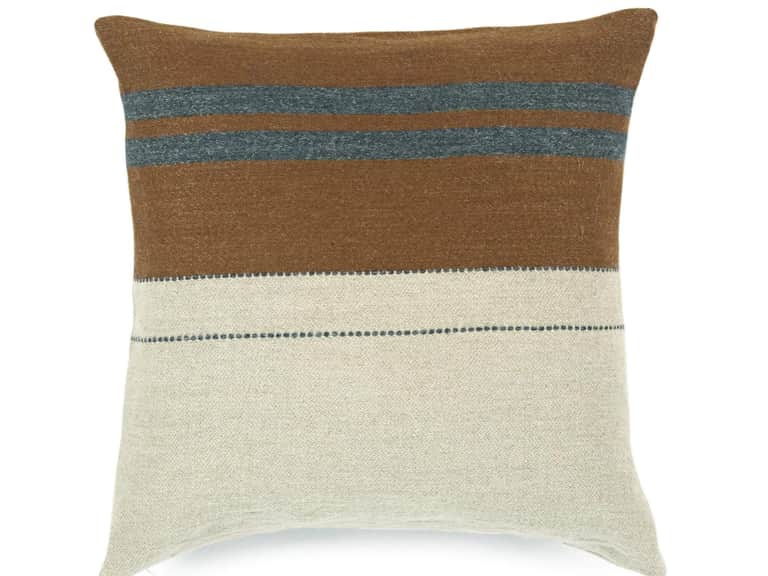
It is also worth distinguishing between bath linens and other woven household textiles. A decorative linen pillow cover or a linen-wool accent may share a natural-fiber vocabulary, but it is not designed to dry the body after bathing. The Simi towel and bath sheet are specifically described as linen-cotton bath textiles, with terry construction noted for the towel. Matching colors across a home can be pleasing, but function should lead the decision.
A quieter kind of everyday luxury
The appeal of a linen-cotton bath towel is grounded in use. It is reached for after a shower, washed often, folded away, and returned to the rail. A thoughtful blend can make those ordinary gestures feel more considered, bringing a tactile surface and a practical format together without requiring elaborate upkeep. The pleasure is in the details: the scale of the towel, the way it hangs, and whether its feel suits your skin.
For some bathrooms, a pair of standard towels is the most sensible foundation. For others, a larger bath sheet offers the enveloping coverage that makes the end of a bath feel especially comfortable. Both formats can work well; the choice is a matter of scale, space, and routine rather than a question of which is universally superior.
Ultimately, the most reliable guide is a combination of composition, construction, measurements, and care instructions. Linen and cotton each bring a distinct character, while terry loops shape the towel’s surface and dimensions determine how it fits into the room. Choose with those specifics in view, launder gently according to the label, and give the fabric room to dry. A well-chosen towel can then become not a statement piece, but something better: a dependable part of daily life.